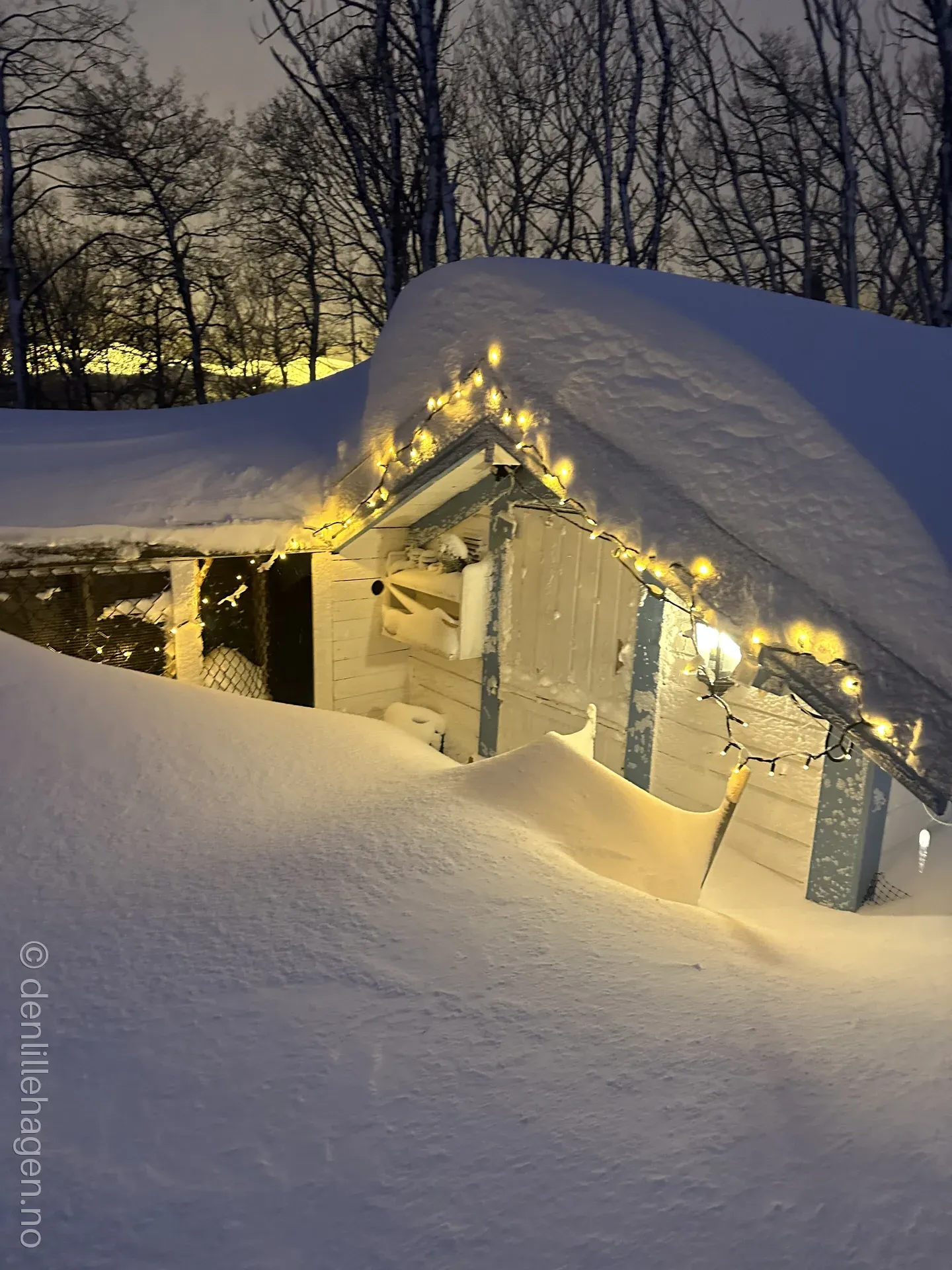
Winter is approaching, and for those of us who keep poultry, it is a good time to prepare before the cold weather really arrives.
Chickens, quail and ducks can generally cope with surprisingly low temperatures, but cold alone is rarely the biggest problem. Damp conditions, drafts, frozen drinking water and poor ventilation can cause much more trouble.
Here at Den Lille Hagen in Norway, we keep chickens, quail and ducks, so preparing their housing for a Scandinavian winter is an important part of our autumn routine.
🐔 Chickens in Winter
Healthy adult chickens are generally quite hardy. Most chickens cope much better with cold, dry weather than with a damp and drafty coop.
Their feathers provide excellent insulation by trapping a layer of warm air close to the body.
Rather than trying to make the chicken coop warm, the most important things are to keep it:
Ventilation is important
It may seem logical to close every opening when temperatures fall, but that can actually make conditions worse.
Chickens produce moisture through breathing and droppings. Without sufficient ventilation, humidity builds up inside the coop.
Cold combined with high humidity increases the risk of frostbite, particularly on combs and wattles.
Ventilation should therefore allow humid air to escape without creating a direct draft where the birds sleep.
❄️ Do Chickens Need Heating?
In most situations, healthy and fully feathered adult chickens do not need a heated coop simply because temperatures fall below freezing.
A dry, sheltered and draft-free environment is usually more important than heating.
Heating can also create additional problems. If birds become accustomed to a warm coop, a power failure during very cold weather can cause a sudden and dramatic temperature change.
Heat lamps can also present a fire risk when used around dry bedding, dust and wooden buildings.
There are exceptions, of course. Young birds, sick or injured birds and certain breeds may require additional protection.
Always observe your own birds rather than relying solely on the thermometer.
🐦 Quail in Winter
Quail require a little more attention during winter.
They are small birds and should have access to a dry, sheltered area protected from wind and drafts.
Keeping their environment dry is particularly important.
Provide plenty of bedding and somewhere they can move away from cold surfaces and wind.
If quail are kept outdoors during winter, their enclosure should offer good protection from rain, snow and strong winds while still allowing adequate ventilation.
Their drinking water also needs frequent checking because small water containers can freeze surprisingly quickly.
🦆 Ducks in Winter
Ducks are remarkably well adapted to cold weather.
Their dense feathers and insulating down provide excellent protection, while the natural oils distributed through their feathers help keep water away from the skin.
However, ducks create one major winter challenge:
Moisture. Lots of it.
Anyone who keeps ducks knows how quickly they can turn clean water and dry bedding into a wet mess.
During winter this becomes especially important because wet bedding combined with low temperatures can create poor living conditions.
Their shelter should therefore be:
Straw can work very well as winter bedding, but wet or heavily soiled material should be replaced regularly.
💧 Water During Freezing Weather
One of the biggest practical challenges during winter is keeping drinking water available.
All poultry must have regular access to fresh water, including during freezing weather.
Check water containers several times during particularly cold days.
Possible solutions include:
Always make sure electrical equipment used around animals and water is designed for the purpose and installed safely.
Ducks also need water deep enough to submerge and clean their bill and nostrils.
Swimming water is different from drinking water. Ducks enjoy bathing, but their essential requirement is access to clean drinking water that allows them to properly clean their bill and nostrils.
🌾 Bedding – Keep It Dry
Good bedding becomes particularly important during winter.
Depending on your housing, suitable materials can include:
The important thing is not simply how thick the bedding is.
It needs to remain dry.
Regularly check underneath the top layer. Bedding that looks dry on the surface can still contain considerable moisture underneath.
This is especially important with ducks.
🍽️ Feeding Poultry During Winter
Birds use energy to maintain their body temperature during cold weather.
A good-quality, balanced feed should remain the foundation of their diet throughout winter.
Make sure feed remains dry and protected from rodents and wild birds.
You may notice that birds eat more during colder periods. This can be completely normal because maintaining body temperature requires energy.
Avoid replacing too much of their balanced feed with treats or kitchen scraps.
🥚 What About Egg Production?
Do not be surprised if egg production falls during winter.
Shorter daylight hours have a major influence on laying.
For many backyard keepers, allowing birds to follow their natural seasonal rhythm is perfectly acceptable.
Production usually begins increasing again as daylight hours become longer.
⚠️ Signs to Watch For
Cold weather itself does not automatically mean your birds are suffering.
Instead, observe their behaviour.
Pay extra attention if you notice:
Individual birds may react differently depending on age, breed, health and condition.
🏡 Our Winter Checklist at Den Lille Hagen
Before winter arrives, we focus on a few simple things:
The goal isn’t to create a tropical indoor climate.
It is to provide a dry, sheltered and well-ventilated environment where the birds can use their natural ability to cope with winter.
🌿 Winter at Den Lille Hagen
Keeping animals through a Norwegian winter requires a little more work, but chickens, quail and ducks are more resilient than many people expect.
Good preparation makes the biggest difference.
Dry bedding, clean water, shelter from wind, good ventilation and daily observation will solve many of the problems associated with winter poultry keeping.
And when the first really cold morning arrives, it is reassuring to know that everything is already prepared.
Want to follow our chickens, quail, ducks and the rest of life at Den Lille Hagen?
Take a look around our website for more articles about poultry, animals, gardening and small-scale homesteading in Norway.
📚 Sources and Further Reading
The recommendations in this article are based on our own practical experience at Den Lille Hagen combined with guidance from veterinary, university extension and animal welfare sources.
University of Minnesota Extension – Caring for chickens in cold weather
Detailed guidance on winter housing, ventilation, moisture, bedding, frostbite, drinking water and cold stress in chickens. The University of Minnesota highlights that moisture combined with cold temperatures increases the risk of frostbite and that good ventilation is essential during winter.
https://extension.umn.edu/small-scale-poultry/caring-chickens-cold-weather
Merck Veterinary Manual – Management of Backyard Poultry
Veterinary information covering poultry housing, temperature, ventilation and general management. Merck emphasizes that adequate ventilation helps remove moisture from bedding and improves air quality.
https://www.merckvetmanual.com/exotic-and-laboratory-animals/backyard-poultry/management-of-backyard-poultry
Mississippi State University Extension – Quail Brooding Temperatures
Information about temperature regulation and cold stress in quail, particularly young birds. Quail chicks gradually develop their ability to regulate body temperature as they become fully feathered.
https://extension.msstate.edu/agriculture/livestock/poultry/quail-brooding-temperatures
RSPCA – Caring for Ducks and Geese
Guidance on housing, feeding and water requirements for ducks and geese. The RSPCA states that ducks need plentiful access to clean, fresh water and that ice must be removed from their water during winter.
https://www.rspca.org.uk/adviceandwelfare/farm/farmanimals/ducksandgeese/care
RSPCA – Welfare Standards for Domestic/Common Ducks
More detailed welfare guidance covering drinking water, open water facilities and providing water during freezing conditions.
https://www.rspca.org.uk/adviceandwelfare/farm/farmanimals/ducksandgeese
Conditions vary between breeds, individual birds, housing systems and climates. Always monitor your own birds closely during extreme weather and seek veterinary advice if you are concerned about their health or welfare.
Ingen kommentarer ennå – bli den første!